Brand Strategy
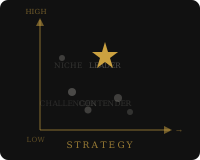
Competitive landscape analysis, positioning maps, brand architecture design, and the strategic rationale that every downstream decision points back to.
Learn moreBrand Strategy & Identity Agency
LionBD works with growth-stage companies and ambitious founders to develop brand systems that command premium pricing, accelerate trust, and become the undisputed reference point in their market.
What We Do
Most brand failures aren't creative failures. They're strategic failures — companies that invested in design before they had a position, or positioned without understanding the emotional mechanics that drive preference. LionBD addresses all four layers.
Competitive landscape analysis, positioning maps, brand architecture design, and the strategic rationale that every downstream decision points back to.
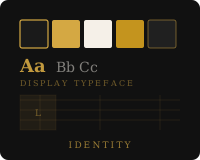
Learn moreLogo systems, colour psychology, typography hierarchy, iconography, and brand guidelines that give your team a repeatable, scalable design language.
Learn moreStrategic name development: linguistic architecture, trademark landscape review, domain availability screening, and the cultural resonance testing that separates a good name from a great one.
Learn moreA systematic diagnostic across consistency, positioning accuracy, perception gaps, and identity health — followed by a prioritised refresh roadmap with clear ROI rationale.
Learn moreWhy Brand Investment Matters
Brand equity is one of the few business assets that simultaneously reduces cost (lower customer acquisition spend, lower price sensitivity) and increases revenue (premium pricing, higher retention, referral velocity). The research is consistent: companies with recognised, well-governed brands outperform on both top-line and bottom-line metrics.
The mechanism is not mysterious. When a buyer already trusts your brand before the first conversation, every stage of the sales cycle shortens. When your identity is coherent across touchpoints, cognitive ease creates a preference that competitors struggle to price-match away. Brand premium is a structural advantage, not a vanity metric.
How We Work
Brand development fails when it starts with aesthetics. Our process starts with evidence — stakeholder interviews, competitive audits, audience research — and builds toward a brand that is both strategically grounded and distinctly expressive.
Stakeholder workshops, audience research, competitive landscape mapping, and category analysis to surface the strategic truths your brand must address.
Positioning statement, brand architecture, core value propositions, and the competitive frame of reference that defines how your brand wins.
Logo system, colour palette with psychology rationale, typography hierarchy, voice guidelines, and the visual language that makes strategy tangible.
Rollout planning, asset production, stakeholder alignment, and the go-to-market narrative that introduces the new brand with clarity and confidence.
Brand guidelines, usage standards, team training, and the governance framework that keeps the brand coherent as the company scales.
Common Questions
Brand strategy defines why your brand exists, who it serves, and how it is positioned against competitors. Brand identity is the visual and verbal system that makes that strategy tangible. Strategy precedes identity; identity expresses strategy. A rebrand that skips the strategy phase produces a new logo for an unchanged position — which rarely solves the underlying problem.
A full engagement — discovery through delivered brand guidelines — typically spans 8 to 16 weeks depending on scope and decision velocity. Brand naming alone runs 4 to 6 weeks. A brand audit with refresh roadmap runs 3 to 5 weeks. Timelines are confirmed during the discovery phase once scope is defined.
Six dimensions: brand consistency across touchpoints, competitive positioning accuracy, audience perception gaps, visual identity health, verbal identity clarity, and brand governance maturity. The deliverable is a prioritised findings report with a structured refresh roadmap — quick wins, medium-term improvements, and strategic repositioning recommendations.
Strong signals: entering a new market segment, post-merger integration, a business model shift, brand perception that has drifted from business reality, or a name/identity creating friction in sales conversations. Rebranding for cosmetic reasons alone rarely generates a return. Most companies benefit from a brand audit before committing to a full rebrand.
LionBD is optimised for growth-stage companies — typically Series A and beyond, or bootstrapped businesses with revenue and a defined market — where brand investment has a clear multiplier effect on sales, hiring, and market perception. Pre-revenue founders may benefit from a focused naming and positioning sprint as a starting point.
A logo is one element of a brand system. A brand system includes: a positioning strategy, the logo and its usage rules, colour palette with psychology rationale, typography hierarchy, iconography style, photography direction, tone of voice, messaging framework, and governance documentation. A logo without a system is a mark with no language — it cannot scale, and it cannot be consistently applied.
Start Your Brief
Tell us about your company, your category, and what you're trying to achieve. The best brand engagements begin with a candid conversation.
Send Your BriefOr email directly: hello@lionbd.com
LionBD.com is a premium, short, memorable domain ideal for a brand agency, consultancy, or company in the brand development, marketing, or business development space. Serious acquisition inquiries are reviewed and responded to by the domain owner directly.